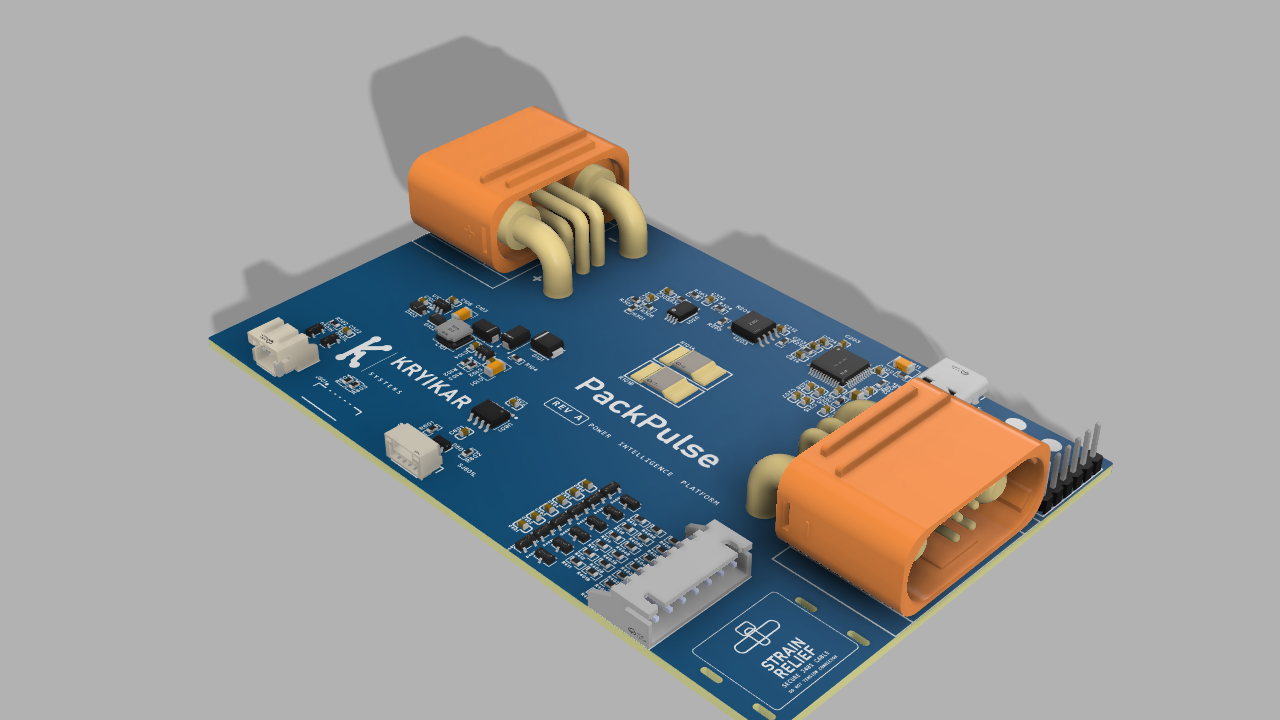
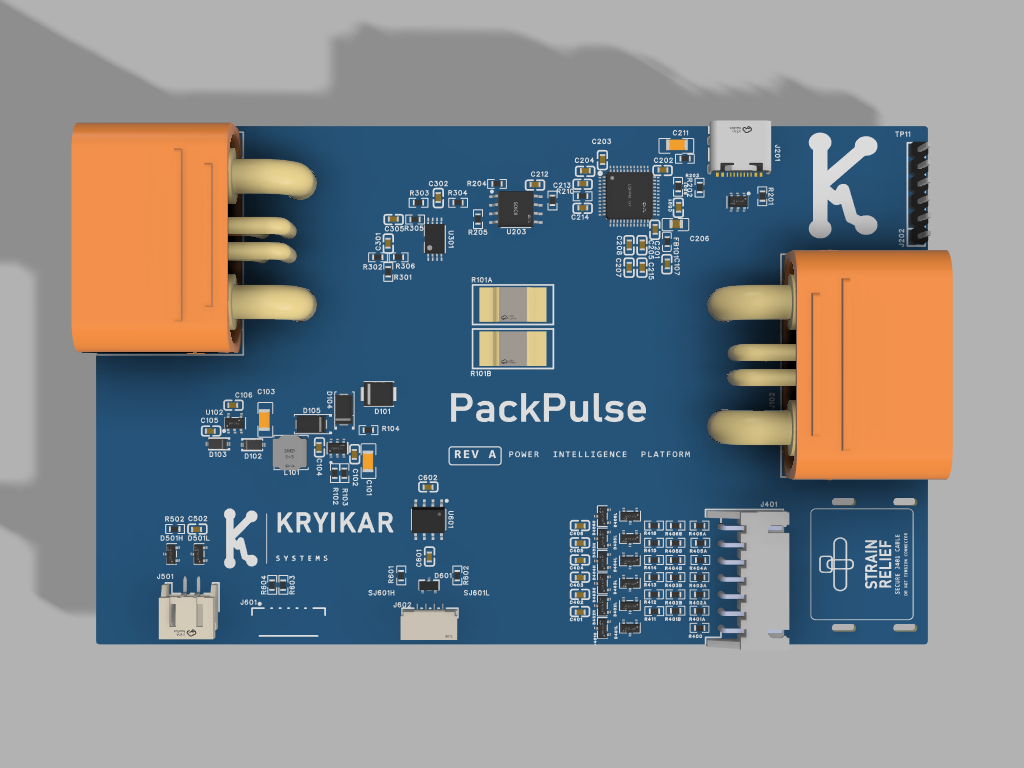
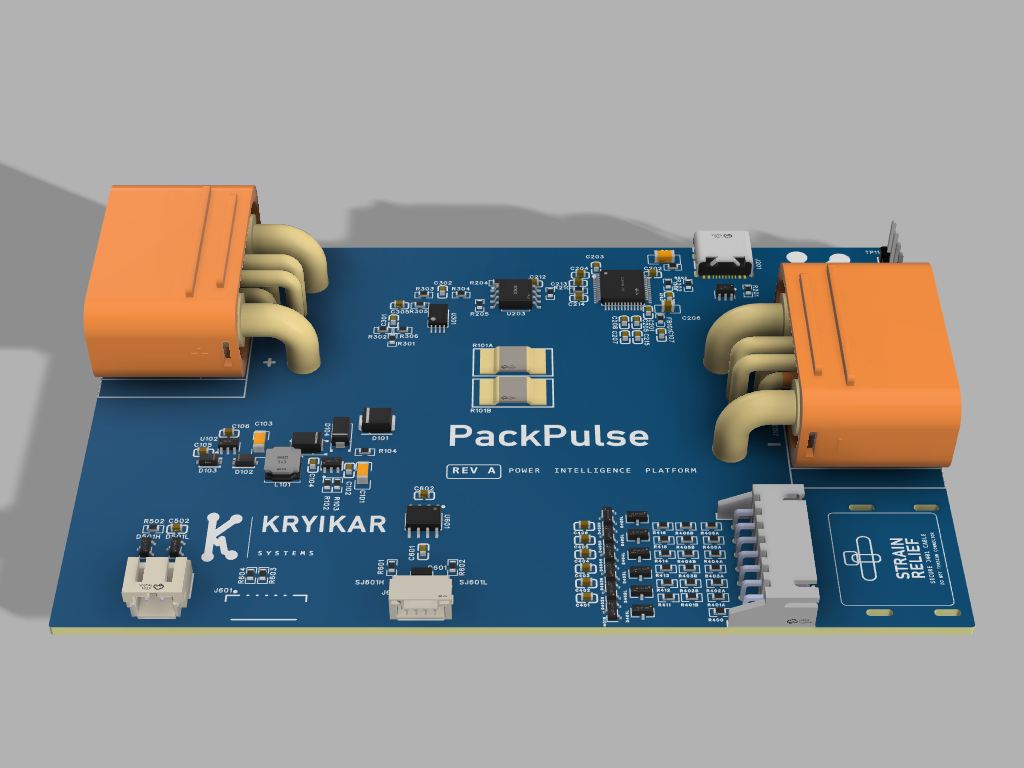
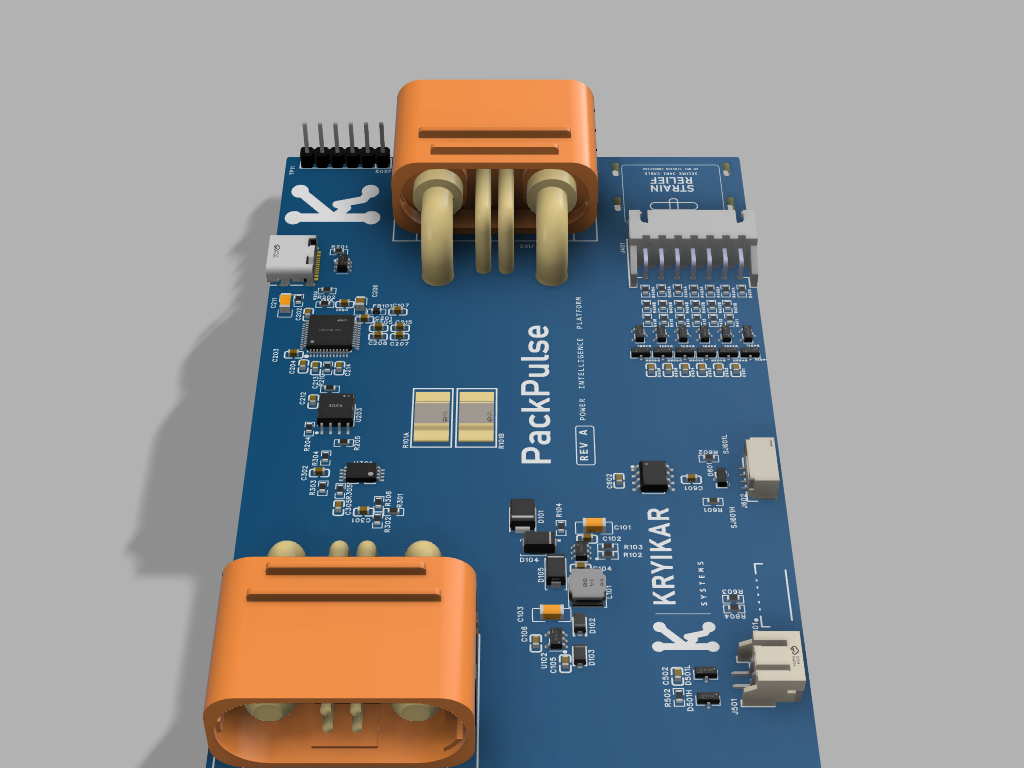
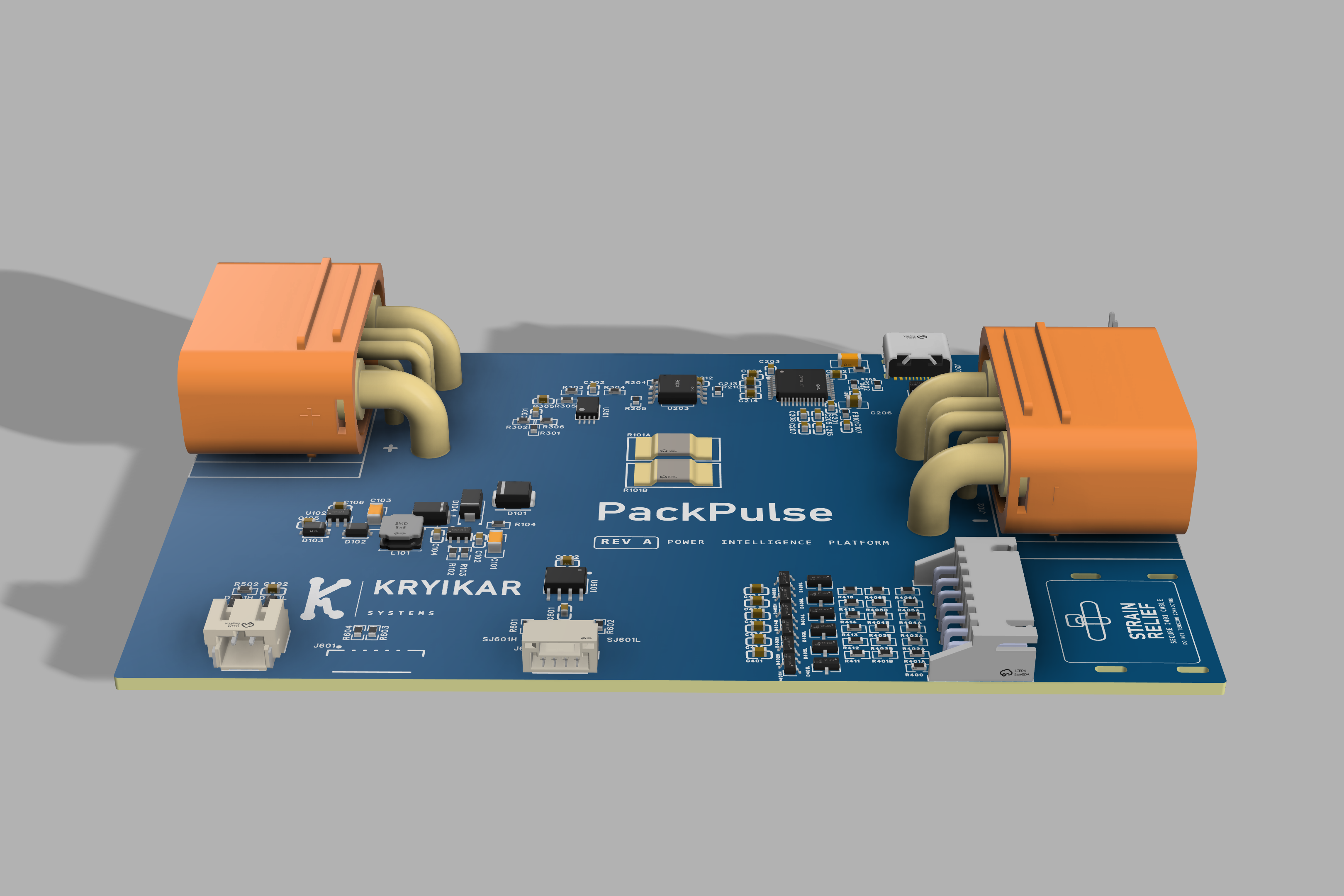
The first PackPulse Rev A board is physically in hand and active bench bring-up is underway. Explore the application experience below, then reserve a place in the founder-beta production queue.
A compact battery-pack telemetry and protection platform designed for early UAV, robotics, and high-current embedded systems development.
Kryikar Systems is building hardware that makes pack voltage, current behavior, cell balance, thermal conditions, and system telemetry visible before small faults become mission-ending failures.
Continuous pack-level voltage, current, and thermal capture, logged onboard and streamed for analysis.
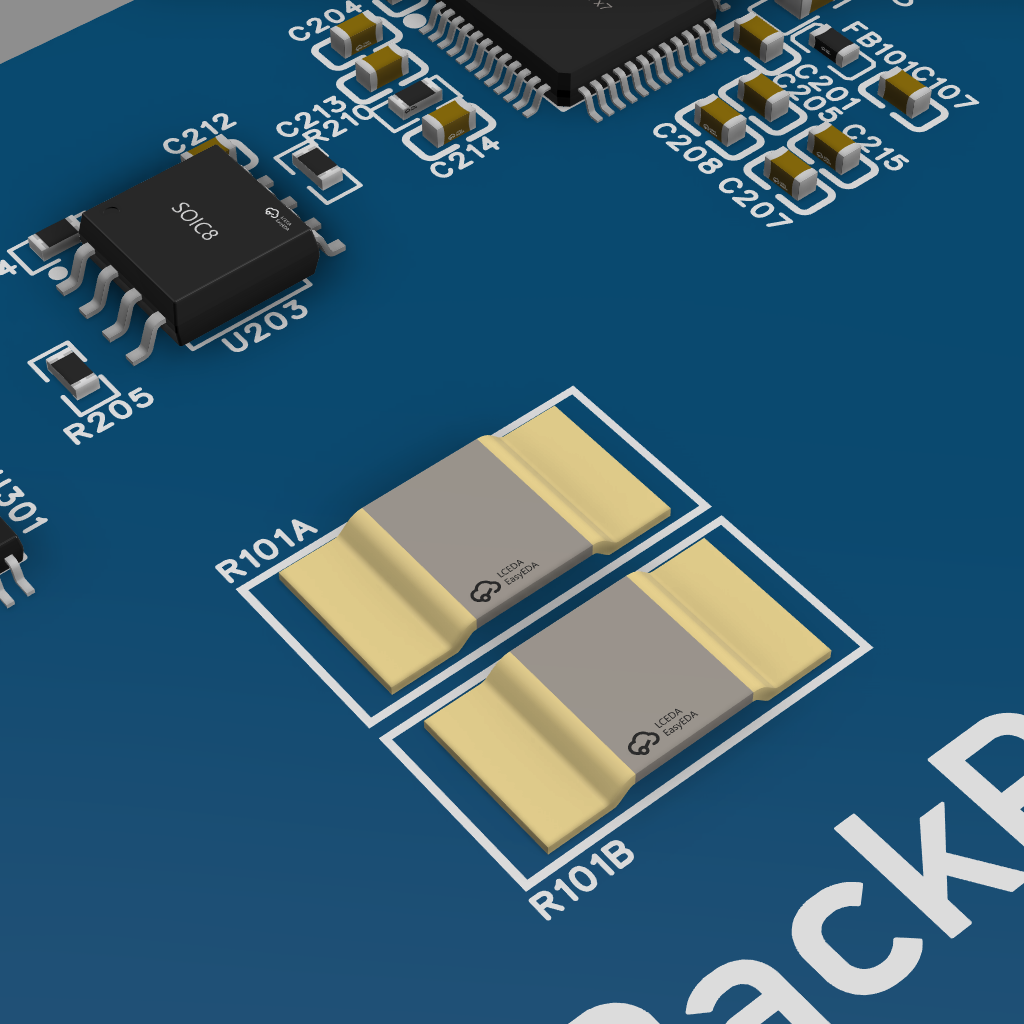
High-side shunt sensing and precision dividers designed for noisy, high-current switching environments.
Misplug-tolerant sense paths, clamped inputs, and firmware fault detection built in from the schematic up.
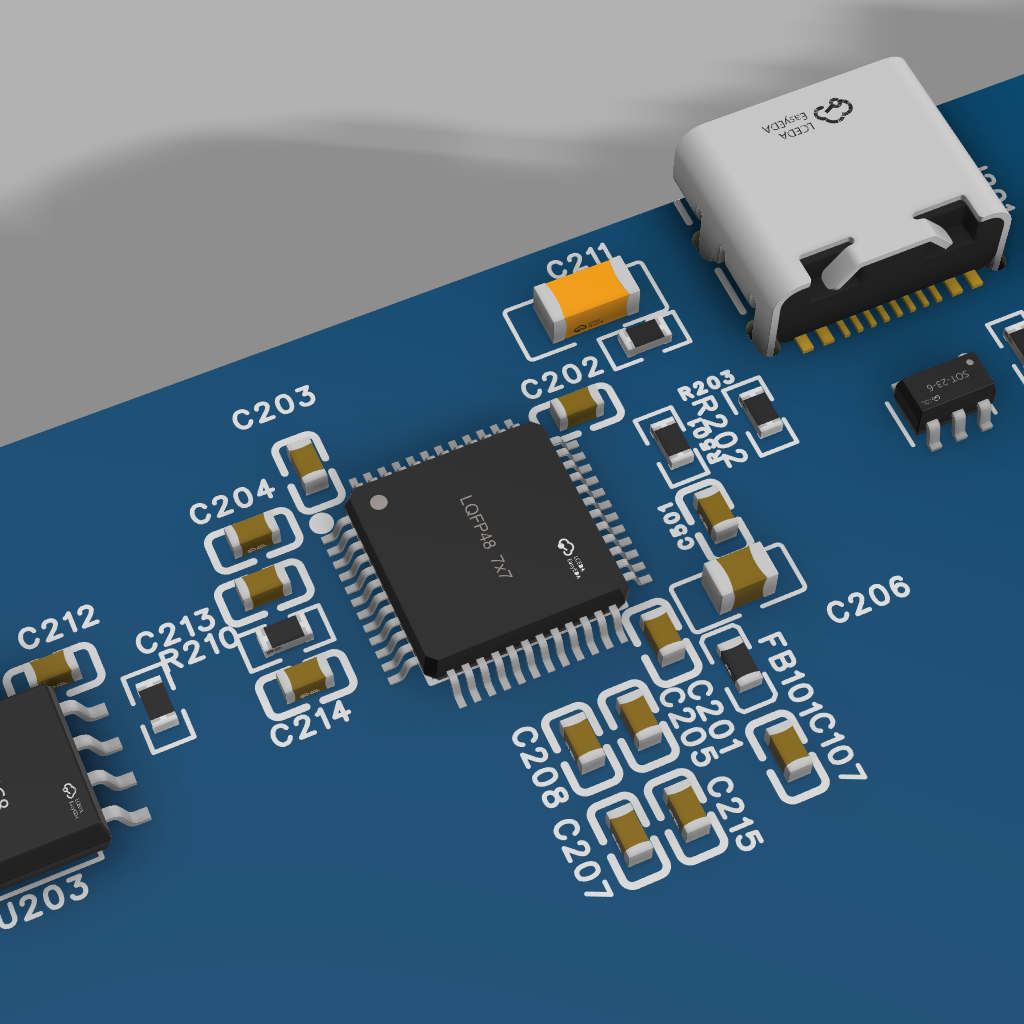
Transceiver and Pixhawk-convention connectors provisioned in hardware for future multi-module integration.
Change pack condition, cell count, and load to see how the PackPulse application turns telemetry into an actionable health assessment. This is an interactive product simulation—not data from the board currently on the bench.
Raw voltage and current graphs are not insight. The PackPulse desktop application is being built to read each pack's logged history and return plain-language advisories — abnormal current draw, sag beyond a healthy internal-resistance band, cell imbalance, thermal drift — plus an estimated count of remaining useful cycles that sharpens with every logged session.
A drone's power path runs pack → distribution → ESC → motor. PackPulse Rev A instruments the first link. The product line moves down the chain so tuning advice gets more specific at every step — from "inspect the drivetrain" to "motor 3's feed draws 14% above the median."
Modern ESC firmware already reports eRPM, current, and temperature. Ingesting it over the UART/CAN link Rev A already provisions gets per-motor insight with zero new hardware — motor efficiency divergence, ESC temp outliers, prop-damage signatures under load.
Inline per-ESC feed monitoring on the DC side — the same high-side shunt sensing as Rev A, scaled per branch. Per-motor current attribution becomes a direct measurement, not an inference: feed imbalance points straight at a prop, bearing, or ESC timing issue.
True phase-current sensing after the ESC is a fundamentally harder, three-phase measurement — a long-term direction, realistic through ESC integration or partnership rather than a near-term board. Stated plainly, because that's how we work.
Kryikar Systems follows a gated engineering process: evidence closure, schematic placement, wiring review, PCB review, prototype bring-up, and controlled founder beta testing. No stage opens before the previous gate closes, and no rating is published before its validation tier passes.
Kryikar Systems is being built by a small founder team focused on disciplined aerospace-grade hardware development. The goal is not to look large before the product is real; the goal is to build carefully enough to earn trust.
Join the founder-beta production queue while the first Rev A board is on the bench. Reservations are reviewed in order and receive validation updates before any payment request.